
With the increase in technology has allowed students to transform the classroom into a real-world simulation or a fictional simulation, this has been made possible through Virtual Reality (VR) (Checa & Bustillo, 2019).

Using the CoSpace App 
Scan this QR code to explore an Robotics lab 
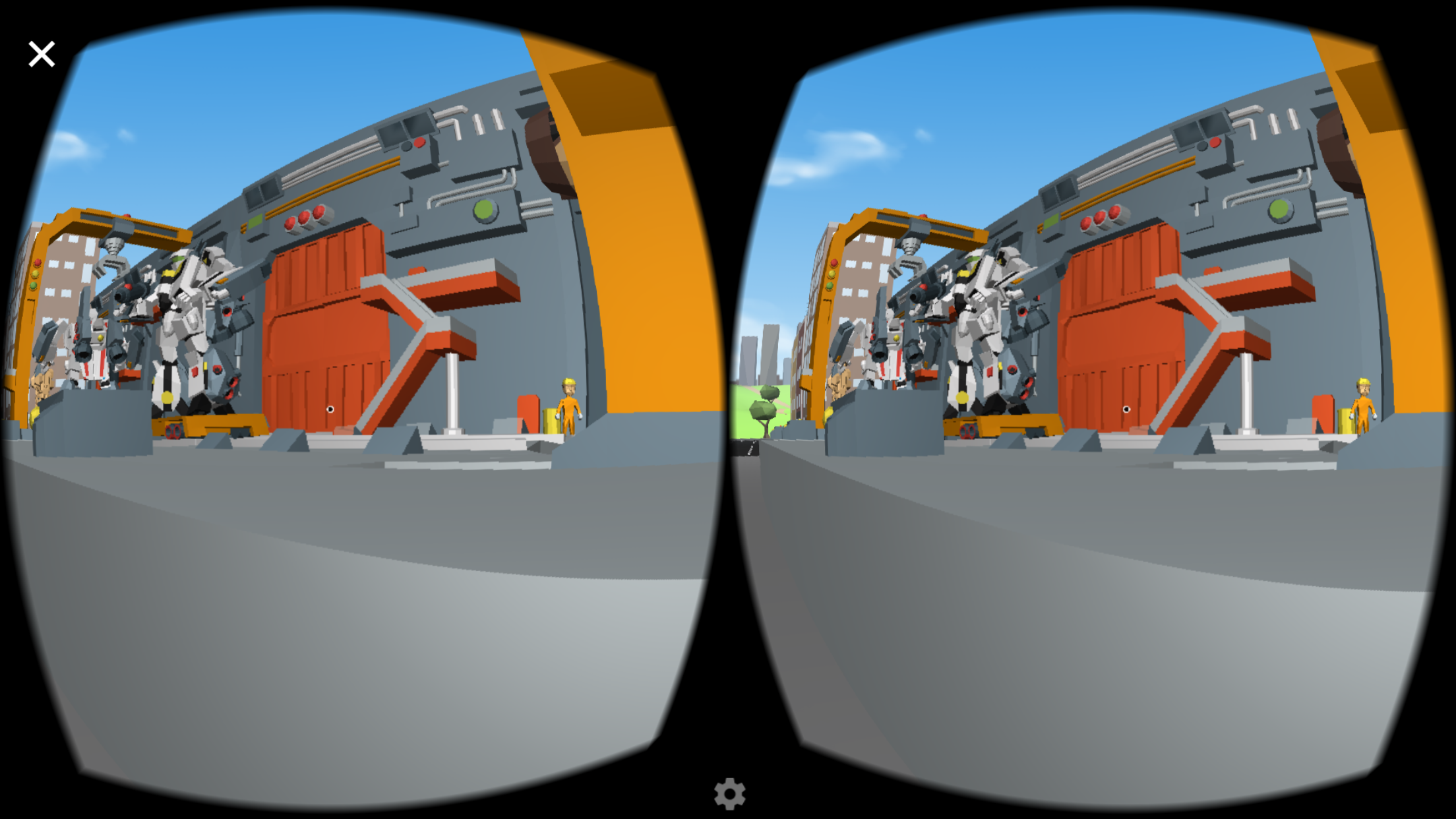

VR has allowed students to express their creativity through two different methods (Alfadil, 2017). Students can create Virtual worlds using platforms like CoSpace. These platforms allow students to express creativity by allowing them to design virtual storybooks, plays, geographic location, or recreate historical events (Checa & Bustillo, 2019; LitsLink, 2019). This method allows the student to design the space and process the information in a fun and engaging way (Checa & Bustillo, 2019). The other method is getting students to explore pre-made content that can be geographic locations that students can walk around and explore, or it can be a display of famous artworks etc (Brown & Green, 2016). This method can spark creativity as students can engage with their topic (Johnson, 2001). For example, students that are learning about William Shakespeare have the opportunity to explore the globe theatre and what it would be like without having to travel to London to experience, which can be costly and impractical (Brown & Green, 2016; LitsLink, 2019). Students’ creativity is encouraged as they can visualise and experience something in the classroom. Teachers can get them to write what they experience or what happened or what could happen next. Teachers can get students to write a play that would be performed in the globe theatre, and visual arts teachers can use it as inspiration for what they wish the students to create.
VR also comes with some negatives. VR devices can be quite costly; they vary from cardboard cut-out that requires a mobile device to a mobile headset that can cost over $1000 for some schools a mobile headset is not feasible as they do not have the funds or they can only purchase a few (Neelakantan, 2019). Therefore, it takes longer for all students to use the headset. The VR headset can also take a while to get used to and set up, which can cause students to get distracted (Neelakantan, 2019; LitsLink, 2019). It is also critical that teachers have a set learning outcome they want to achieve so students understand why they are using VR (Alfadil, 2017).
There are many options in which teachers can use VR in the classroom to encourage creativity within the students.
References
Alfadil, M. M. (2017). Virtual Reality Game Classroom Implementation: Teacher Perspectives and Student Learning Outcomes. ProQuest Dissertations Publishing, 23-27.
Brown, A., & Green, T. (2016, June 30). Virtual Reality: Low-Cost Tools and Resources for the Classroom. Tech Trends, 60, 517-519.
Checa, D., & Bustillo, A. (2019, December 5). A review of immersive virtual reality serious games to enhance learning and training. Multimedia Tools and Applications, 79, 5501-5527.
Johnson, A. (2001). VR as Instructional Technology – The CAVE as Classroom. Works and Days, 67-76.
LitsLink. (2019, October 03). Usage of Virtual Reality in Education: Pros and Cons. Retrieved from Litslink: https://litslink.com/blog/usage-of-virtual-reality-in-education-pros-and-cons
Neelakantan, S. (2019, December 02). Schools Face Barriers to VR Adoption in the Classroom. Retrieved from edtechmagazine: https://edtechmagazine.com/k12/article/2019/12/schools-face-barriers-vr-adoption-classroom
 EDUC3620 Digital Creativity and Learning ePortfolio
Hi there,
Thank you for your post. I was wanting to comment on one point in particular because I think it is such a good one, that teachers need to set learning outcomes when using VR. In my own research I read about the concerns that the novelty of the technology could distract from pedagogy (Bower & Sturman, 2015) and I think your suggestion could be a really neat way to navigate this potential problem. Not to mention, as teachers we should generally only be designing activities that enhance the learning experience for the students. Thus, it seems to me that by gearing any use of VR towards a set of outcomes is more likely to result in valuable learning experiences and circumvent the issue of the distracting nature of novel technology.
What do you think?
Regards,
Miss Wilkes
LikeLike
Hi Georgina,
Your blog post regarding Virtual Reality presented an informative point in relation to how technology can foster creativity within the classroom. Your references to the methodology of Virtual Reality sparked my curiosity to come up with ideas of how I can integrate Virtual Reality into a Primary School classroom. I believe your limitations provide a brief overview, however, do you believe there are any other issues that could cause students to become distressed?
Regards
Hugh
LikeLike
Hi Georgina,
I really enjoyed reading your blog about Virtual Reality. Your blog post was very informative in the methods of using the VR for educational purpose, especially when you stated that VR promotes student creativity and allows them to create and design their own experience. Furthermore, I agree that VR allows students to travel to travel and explore geographic locations that are otherwise too costly or impractical for students whereas VR can mitigate this. I just would like to know the practicality of the VR across different age brackets, otherwise, very nice blog post.
LikeLike