
The definition of what classifies as a robot varies depending on individuals’ perceptions and ideas, however, the basic points of what makes a robot is that it is a mechanical machine that is programmable to independently complete tasks around the physical boundary that are designed (Edwards, Edwards, R. Spence, Harris, & Gambino, 2016).
Robotics has allowed students to adapt a cross-curriculum way of thinking, using science and mathematical skills students can utilize robotics in two main ways, they can focus on the design process when producing a robot or they can focus on the digital side of using computational thinking skills to program a robot to complete certain tasks (Curto & Moreno, 2013; Edwards, Edwards, R. Spence, Harris, & Gambino, 2016).
Using Robotics in the classroom students can foster creativity through being able to physically design a robot that can complete a given task or they can create code that allows the robot to complete pre-design tasks (Alimisis, 2013). Robotics can be used in the classroom to tell a story, solve a puzzle, understand perimeters, and formulate experiments using the robotics (Edwards, Edwards, R. Spence, Harris, & Gambino, 2016).
A constructivist approach to teaching is fostered when using robotics within the classroom (Curto & Moreno, 2013). Robotics allows students to design and construct robots as well as the use of trial and error in which students are encouraged to learn from mistakes and broaden their understanding of the concepts.
One example of a robotic in the classroom is Dash and Dot. Dash is a robot that can Move Light up and make noises and Dot is unable to move (Make Wonder, 2019; ECN, 2019). Both dash and dot can react to their surroundings. Dash and Dot use five different apps Wonder, Blockly, Xylo, Path, and Go (Make Wonder, 2019). These apps allow students to interact with Dash and Dot. Dash and Dot can foster creativity by allowing students to design algorithms and control the robots (Refer to Slideshow on an example of using Dash and Dot in the Classroom)
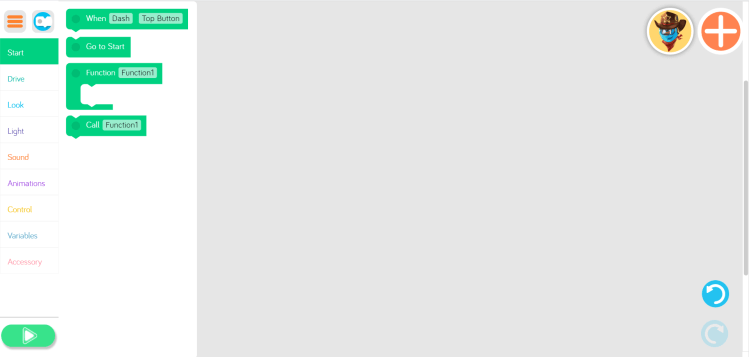
Alternative Activity to use in a Language Class Room. Students are to design a path for Dash in English then in Translate it into the Secondary language. 
Alternative Activity to use in a Language Class Room. Students are to design a path for Dash in English then in Translate it into the Secondary language. 
Alternative Activity to use in a Language Class Room. Students are to design a path for Dash in English then in Translate it into the Secondary language. 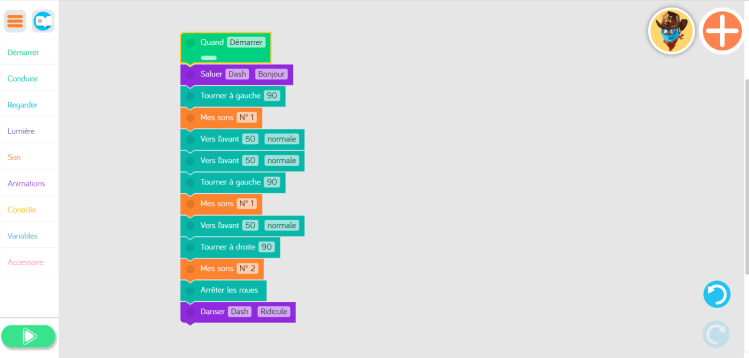
Alternative Activity to use in a Language Class Room. Students are to design a path for Dash in English then in Translate it into the Secondary language.
As with all contemporary technology, there are limitations to the creativity that it can foster. Students can become distracted by the robot and playing with it does not apply to what they are doing with learning and therefore it can become time-wasting (Edwards, Edwards, R. Spence, Harris, & Gambino, 2016). Robotics can vary in price and the more advanced the programming the more expensive and therefore students can become limited to the availability of using a robot as well as the ability of robots. Robotics can also be difficult to understand and therefore can deter students from engaging with the content and thus not allowing creativity to occur (Alimisis, 2013).
With robotics becoming accessible outside industrial uses it is critical that students learn how to program and build robotics.
References
Alimisis, D. (2013). Educational robotics: Open questions and new challenges. Themes in Science & Technology Education, 63-71.
Curto, B., & Moreno, V. (2013). A robot in the classroom. Proceedings of the First International Conference on Technological Ecosystem for Enhancing Multiculturality, 295-296.
ECN. (2019). Educational Products Bring Robotics into the. ProQuest, 1-4.
Edwards, A., Edwards, C., R. Spence, P., Harris, C., & Gambino, A. (2016). Robots in the classroom: Differences in students’ perceptions of credibility and learning between “teacher as robot” and “robot as teacher”. Computers in Human Behavior, 627-634.
Make Wonder. (2019). Wonder Workshop | Home of Dash, Cue, and Dot – award-winning robots that help kids learn to code. Retrieved from Wonder Workshop – US: https://www.makewonder.com/
 EDUC3620 Digital Creativity and Learning ePortfolio
Hi
Fantastic read, I found your blog informative and the uses of robotics in the classroom were clear. The slides provided additional understanding of the process involved and provided clarity. I appreciate the extra effort because it provided context to the technology!
I would be interested in more research about integrating creativity and problem solving into lesson involving Dash and Dot. Do you have any suggestions? Also, What stages do you think Dash and Dot best cater and what kind of subject areas could these lessons involve?
Overall, clear blog post. Well done!
LikeLike